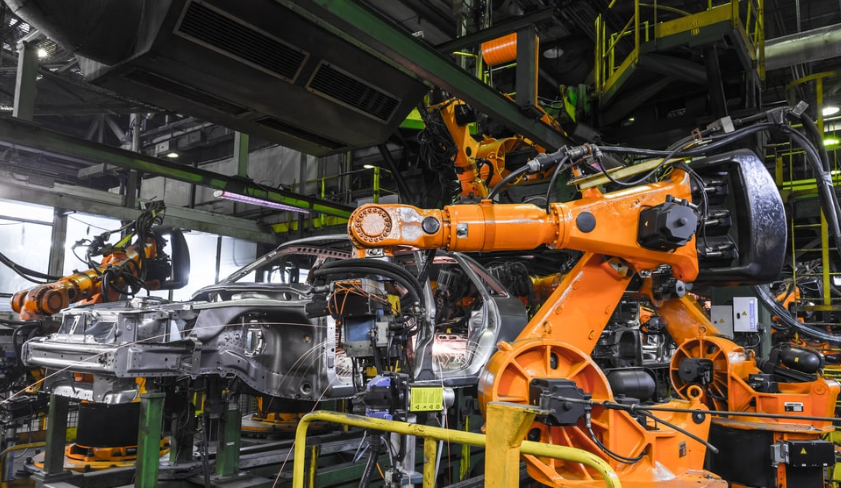
The landscape of automation is shaped by two distinct types of robots: industrial and service robots. Industrial robots excel in executing repetitive tasks, enhancing productivity in manufacturing settings. Conversely, service robots focus on assisting humans in diverse environments, such as healthcare and hospitality. This differentiation raises questions about their respective roles and future developments. Understanding these contrasts is essential for grasping the broader implications of robotic innovation in various sectors.
Understanding Industrial Robots
Industrial robots represent a significant advancement in automation technology, characterized by their ability to perform repetitive tasks with high precision and efficiency.
These machines enhance manufacturing efficiency through diverse robotic applications, such as welding, assembly, and material handling.
Exploring Service Robots
Service robots have emerged as a transformative force across various sectors, designed to assist humans in tasks that enhance convenience, efficiency, and safety.
Leveraging advanced robot capabilities, these machines are utilized in diverse service applications, such as hospitality, healthcare, and logistics. Their innovative design and functionality contribute to streamlining operations, empowering individuals, and fostering an environment where human potential can flourish unencumbered.
Key Differences Between Industrial and Service Robots
While both industrial and service robots are engineered to enhance productivity, their applications and functionalities diverge significantly.
Industrial robots focus on repetitive tasks within manufacturing environments, showcasing high task specialization.
In contrast, service robots cater to diverse sectors, including healthcare and hospitality, emphasizing flexibility.
This applications comparison underscores the unique roles each robot type plays in advancing operational efficiency and enhancing human experiences.
The Future of Automation: Impacts and Innovations
As automation technology continues to evolve, the impact on various industries is becoming increasingly profound, driving innovations that reshape operational frameworks.
Autonomous systems are enhancing productivity while creating a versatile robotic workforce capable of performing complex tasks.
This evolution fosters new economic opportunities, challenges traditional labor dynamics, and promotes a shift towards more flexible, adaptive business models, ultimately redefining the future of work.
Conclusion
As the dawn of automation unfolds, the contrasting landscapes of industrial and service robots paint a vivid tableau of innovation. Industrial robots, like unwavering sentinels in factories, execute tasks with mechanical precision, while service robots glide through bustling environments, seamlessly bridging human needs with technology. This interplay of specialization and flexibility not only enhances productivity but also redefines human-robot collaboration, heralding a future where efficiency and empathy coexist in harmony, shaping the world of tomorrow.